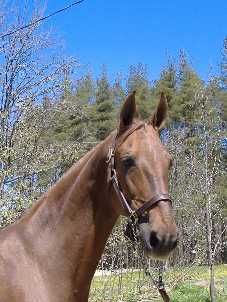
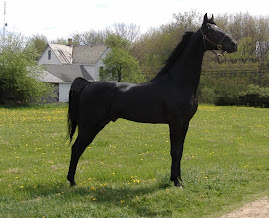
Ace has been fixed up with a woman. He has been going out with her a short time each day for the past two weeks as they get to know each other. For the first time ever in his life, he irritated a horse enough to get bitten back. Aside from an a$$-whooping delivered by the Grey Horse one day, no other horse has ever tried to stand up to his crap. This is great news because it is the first step in his long over due socialization and integration into a group. I would have loved to see the look on his face when he got bitten.
Ace has not been happy with the recent turn in the weather. Today is very cold and blustery with driving rain. Like his mother, Ace has a very short, fine, plushy coat, and he does not like to get it dirty. I don't remember ever seeing him roll in the dirt or having to clean mud off of him. He's a hot house flower. Today he was objecting to being out in the elements woman or no woman. His owner said last week she was watching from the house as Ace and his girlfriend ran and acted stoopid, and Ace did a sliding stop into a corner wiping out on his side. He stood up quickly hoping no one had seen that. I'm sure he was just as upset about the dirt as he was about the gravity. Ace would be a perfect candidate for a horsey treadmill. That way he could stretch his legs, get his exercise, and never leave the comfort of the barn.
As for his health, he is doing well on the ulcer medication. When his owner tried to reduce it, he got a bit colicky so he is back on the full dose. I talked with a couple of professional Saddlebred caretakers and both of them agreed that it sounded like the pain from the ulcers were the root of his discomfort triggered anxiety episodes. One related a story of a stallion who had undergone two extensive colic surgeries with a lot of intestine removed. Afterwards, he could not eat hay because it irritated his entire digestive tract and he had to be on a complete feed instead.
In my conversations, I did learn of a drug that has been used to successfully treat the self mutiliation syndrome. It is the anti-anxiety drug Imipradene. Originally used to enhance semen quality in stallions used for AI, it was found to also reduce the mutilation tendencies, although a residue of the learned behaviors did remain from habit. As far as I know, no actual research has been done regarding appropriate dosage to treat the anxiety, but it does sound promising for extreme cases if no other solution can be reached.
So, Ace's life is going well. I don't know if this is directly related to his comfort on the ulcer medication, or just a matter of him growing up, but he is beginning to loosen up in the shoulders and move more freely. His owner is mostly worried now about the coming winter and being able to keep him on a regular turnout schedule. That is always an issue in our area since we have at least 6 months of ice, snow and wicked mud. At Mom's barn, we are lucky to have the 50 x 50 indoor. The paddocks are now off limits to save the seeding for next summer's grazing and turnout is limited to the arena and small dry lot. We had a new load of coarse sand delivered this week, and my step father has been hard at work leveling the ridges and ripples before spreading our wonderful new winter footing which keeps us going in even the worst blizzard and misery.
Showing posts with label Studly McPoop. Show all posts
Showing posts with label Studly McPoop. Show all posts
Wednesday, November 17, 2010

Monday, October 25, 2010
Any Updates?
No news is good news.
I haven't spoken to Ace's camp for a couple of weeks now. They were trying the ulcer treatment and a calming supplement. The farrier was here last week, and he said he'd been there and the colt looked good, and all seemed peaceful. We're hoping the ulcer treatment eliminates any pain trigger he had, and tweaking his routine will be enough to take care of some of the behavioral issues. Also, his testosterone levels should finally be dropping (it's been about two months) and that should help as well.
I haven't spoken to Ace's camp for a couple of weeks now. They were trying the ulcer treatment and a calming supplement. The farrier was here last week, and he said he'd been there and the colt looked good, and all seemed peaceful. We're hoping the ulcer treatment eliminates any pain trigger he had, and tweaking his routine will be enough to take care of some of the behavioral issues. Also, his testosterone levels should finally be dropping (it's been about two months) and that should help as well.
Thursday, September 30, 2010
The Plan of Attack
Mom says that Ace's owner called her this morning before Mom was even out of bed and seems very positive about tackling this. They talked for quite awhile until Ace (who was tuned out in the rain) came to the window and whinnied for Siri to come and put him in the barn. Like my mother says "a brilliant mind in a fragile psyche."
Fortunately our vet has some familiarity with this and agrees that the horses get an endorphine high from it and that because of that it quickly becomes a pattern that is hard to break. Without having had him scoped we are all assuming he has ulcers. Cornell wanted to scope him, but Siri said just go ahead and treat him because no doubt he has them, so he was started on that already and will continue. Hopefully he can come off the expensive stuff and maintain on aloe vera juice instead. He is also starting on Vitamin B-1 which I had also heard was effective as a calming agent, so I am reassured that Dr. Tim's thoughts are parallel to my findings.
So we'll see. It is actually comforting to think that he's just a little crazy because we, as horse people "get" that don't we? I'm glad the exploratory surgery wasn't done looking for an intestinal cause of the colic as that would have caused even more stress. If ulcer pain caused the colic symptoms and the daily discomfort is also triggering the episodes we have hope because ulcers are treatable.
I'll keep you all posted.
Fortunately our vet has some familiarity with this and agrees that the horses get an endorphine high from it and that because of that it quickly becomes a pattern that is hard to break. Without having had him scoped we are all assuming he has ulcers. Cornell wanted to scope him, but Siri said just go ahead and treat him because no doubt he has them, so he was started on that already and will continue. Hopefully he can come off the expensive stuff and maintain on aloe vera juice instead. He is also starting on Vitamin B-1 which I had also heard was effective as a calming agent, so I am reassured that Dr. Tim's thoughts are parallel to my findings.
So we'll see. It is actually comforting to think that he's just a little crazy because we, as horse people "get" that don't we? I'm glad the exploratory surgery wasn't done looking for an intestinal cause of the colic as that would have caused even more stress. If ulcer pain caused the colic symptoms and the daily discomfort is also triggering the episodes we have hope because ulcers are treatable.
I'll keep you all posted.
Replies to comments
Because the other post is so darn long, I'll reply to the comments here.
Yes, Ace has always exhibited nervous and "superstitious" behavior. He paws at dinner time and has done since he was about two weeks old. The day he was weaned he developed the mouth rinsing ritual to replace being able to nurse to calm himself. He would run frantically for a few minutes, then go the the bucket and rinse. He is absolutely obsessed with marking manure piles.
Yes, the stress of his environment could certainly have contributed to this early onset. Ideally he would be out in a large pasture playing with colts his age, but our set up, and the new owner's set up require individual turnout for set periods of time. We tried several times to buddy him up when he was first weaned, but he was so aggressive we worried he would hurt the subordinate gelding and we were certain that Grey would hurt him trying to put him in his place. He has always been in sight of other horses, and allowed to visit but never got properly socialised. This set up has worked for 6 other Saddlebred or half Saddlebred colts. And it is also how my Grandmother raised half a dozen so while not ideal, it isn't the direct cause of Ace's issues, but an exacerbating factor. We knew within a few months that we really had our hands full, as he was far more tricky to handle than anything we had ever dealt with. Not dangerous just... tricky.
Ace's current owner, who bred his dam and dealt with many of these related horses, has had two or three self mutilators, and can name two stallions in his immediate ancestry who had it, but nothing this extreme. On the other hand, I worked with a half bother of Copy's and a full brother and neither of them showed signs. We owned her 3/4 sister and she was fine and produced all "normal" foals. I believe this is pretty common in Saddlebreds but not talked about, like several congenital issues we have in our stock. We owned another unrelated Saddlebred mutilator who had a lot of mental/emotional issues. I spoke to another ASB pbreeder last evening who had an extreme case, but she had to put the colt down at 10 months because of Wobblers (also a nuerological condition) and I wonder if those syndromes are somehow related.
Even Grey shows some signs. He is a slight "head shaker" (which is a more common equine nuerological Tick) but not enough to be a problem. He can't stand wearing a shanked bit because it tickles his whiskers and he will stop repeatedly to rub the bit against his chest, and sneeze violently... so he wears a snaffle and will never be a saddle seat horse. If Grey feels stressed, he will lick his chest... usually when he is having his girth tightened. And he nickers a low nicker very often, especially when startled, which, after reading up, sounds sort of like the uncontrolled vocalizations of the equine tourettes.
So, reading these articles at least gives us some understanding, puts alot of old puzzle pieces together, and gives us a direction if not answers. However, I can say that Ace will not be spending his life on Prozac. Only time will tell the outcome of this.
Yes, Ace has always exhibited nervous and "superstitious" behavior. He paws at dinner time and has done since he was about two weeks old. The day he was weaned he developed the mouth rinsing ritual to replace being able to nurse to calm himself. He would run frantically for a few minutes, then go the the bucket and rinse. He is absolutely obsessed with marking manure piles.
Yes, the stress of his environment could certainly have contributed to this early onset. Ideally he would be out in a large pasture playing with colts his age, but our set up, and the new owner's set up require individual turnout for set periods of time. We tried several times to buddy him up when he was first weaned, but he was so aggressive we worried he would hurt the subordinate gelding and we were certain that Grey would hurt him trying to put him in his place. He has always been in sight of other horses, and allowed to visit but never got properly socialised. This set up has worked for 6 other Saddlebred or half Saddlebred colts. And it is also how my Grandmother raised half a dozen so while not ideal, it isn't the direct cause of Ace's issues, but an exacerbating factor. We knew within a few months that we really had our hands full, as he was far more tricky to handle than anything we had ever dealt with. Not dangerous just... tricky.
Ace's current owner, who bred his dam and dealt with many of these related horses, has had two or three self mutilators, and can name two stallions in his immediate ancestry who had it, but nothing this extreme. On the other hand, I worked with a half bother of Copy's and a full brother and neither of them showed signs. We owned her 3/4 sister and she was fine and produced all "normal" foals. I believe this is pretty common in Saddlebreds but not talked about, like several congenital issues we have in our stock. We owned another unrelated Saddlebred mutilator who had a lot of mental/emotional issues. I spoke to another ASB pbreeder last evening who had an extreme case, but she had to put the colt down at 10 months because of Wobblers (also a nuerological condition) and I wonder if those syndromes are somehow related.
Even Grey shows some signs. He is a slight "head shaker" (which is a more common equine nuerological Tick) but not enough to be a problem. He can't stand wearing a shanked bit because it tickles his whiskers and he will stop repeatedly to rub the bit against his chest, and sneeze violently... so he wears a snaffle and will never be a saddle seat horse. If Grey feels stressed, he will lick his chest... usually when he is having his girth tightened. And he nickers a low nicker very often, especially when startled, which, after reading up, sounds sort of like the uncontrolled vocalizations of the equine tourettes.
So, reading these articles at least gives us some understanding, puts alot of old puzzle pieces together, and gives us a direction if not answers. However, I can say that Ace will not be spending his life on Prozac. Only time will tell the outcome of this.
Wednesday, September 29, 2010
Neither here nor there
Well, after several phone calls, and some research, Ace's owner and I think we are comfortable pinning the root of Ace's problem on self mutilation. This is an obsessive compulsive driven disorder that only about .005% of horses have. It's pretty common in Saddlebreds, and I don't need any studies to prove that. It is present in Ace's dam line and it looks like he got it in spades. We are going to look into some treatment ideas and see if we can get any improvement before he seriously hurts himself (he has recently cracked a 2 inch thick tongue and groove hardwood wall)
Ace is the most high strung horse I've ever met. He started grabbing his left side before his first birthday. He has always been very obsessive/compulsive about manure piles and marking his territory. He often get's a preoccupied, glassy stare that his current owner attributed to pain, but now with closer observation over the past week looks like it could be the first clue that he is going into one of his episodes. He has gotten progressively worse over the summer, and it seems that in his case, gelding him only made it worse, not better as we hoped. I don't know if the pain from the colic episode triggered more violent obsessive behavior or if the obsessive behavior triggered the colic.
Naturally, we're going to run this by the vets, and I have some phone numbers already of people who have experience dealing with this so we'll see how things pan out. Here is an excellent general article from The Horse.com It's fascinating to learn about, but would be much more fascinating if we weren't dealing with the consequences first hand, especially so early in a horse's life.
Also find further reading here
Equine Self Mutilation
by: Sue McDonnell, PhD, Certified AAB March 01 2000, Article # 3039
It's a beautiful winter weekend, and finally you have a full morning to spend at the barn. You're happily grooming your horse when you notice a cluster of patches of wet hair on his side. Peculiar pattern to the wet hairs -- all are lying forward as if combed with a wet brush. Oh well, odd but probably nothing, you think. But wait, some of the wet spots have hairs missing or chopped off bluntly. You check the other side, and there you find some more patches, like the wet ones, but as if they have now dried. What's going on? There are more of these patches on the left side than on the right side, but they all are in the same area of the abdomen, from the ribs to the stifle.
Just then the barn manager comes in all excited. She's glad you're there early today, because when she was feeding this morning, she found your horse spinning in his stall, tearing at his blanket and biting at his sides. Her first reaction was to scream at him to stop--and he did. She figured the blanket was the problem, maybe it was rubbing or pinching him under the leg. She got some help to investigate. They couldn't find anything out of order with the straps or the blanket, but took it off anyway. Then, just as they closed the stall door, he really went nuts, spinning in a very tight circle, biting his left flank. With each bite, he squealed and kicked out. As he was turning and nipping, he sometimes was bucking and squealing. They were too scared to open the door. He went on for what seemed like forever, as if he wouldn't stop until he tore up the stall or killed himself. Then he gradually came out of it.
"When we screamed his name, he turned toward the stall door, looking at us with a sort of a worried, glassy eye, like he didn't know what was happening. We threw him his hay, and he's been pretty quiet since."
You run your fingers over the wet areas on his flanks and feel some crusty bumps on the underlying skin. Separating the hairs, you can feel little marks in the skin -- anywhere from one-quarter to one inch in diameter. Some are fresh nicks, some are scabbed over, some look healed. The rest of his coat is unblemished. No marks, no wet spots, no chopped or missing clumps of hair other than on his flanks and over his ribs.
So what is going on here?
This behavior commonly is called flank biting or flank sucking. The biting is one aspect of a cluster of behaviors called self-mutilation, because the horse likely will incur serious self-injury during these explosive episodes.
In addition to biting the flanks, self-mutilation sequences can include seemingly uncontrollable violent behavior. From horse to horse, the sequence and form can vary, but most typically includes spinning in circles, bucking, and kicking out with one or both back legs while nipping at the flank, shoulders, or chest. In the photos at the bottom of page 76, there is an example of a horse biting more violently at his chest, and a resulting chest avulsion.
In extreme cases, the horse can violently lunge its body or head into a wall or other solid object. More rarely, a horse might "throw itself" to the ground (from standing to lateral recumbency). A single episode can last from a few seconds to several minutes, uninterrupted. The horse can work up a lather and steam in cool weather. Episodes usually occur in a series separated by a few seconds to a few minutes over a period of minutes, to hours. The total daily time spent self-mutilating can vary from a few seconds to an hour or more. In addition to bite wounds, the most common injuries are to the legs and feet from the spinning and kicking.
Self-mutilation behavior of one form or another has been described in many different species, including humans. Dog and cats lick and chew on their paws or tails. People do all sorts of things--pull out their hair, bite their fingernails or lips, scratch themselves, or deliberately inflict burns, cuts, or other wounds.
People who have seen a horse in the midst of attacking itself often describe the episodes as the most bizarre animal behavior they ever have seen. Mental health professionals or others with first-hand experience with human psychopathology often ask whether this might be the horse equivalent of severe neurotic or even truly psychotic behavior seen in people. For example, Dr. Nicholas Dodman, a veterinary animal behavior specialist at Tufts New England Veterinary College, said he has wondered whether certain forms of self-mutilation in horses might be similar to Tourette's Syndrome in humans. There are some interesting similarities, and some clear differences.
Since self-mutilation occurs in other animal species and a variety of human psychopathologic syndromes, it's probably too early to conclude that any of the self-mutilation seen in horses represents the same pathology as Tourette's in people. In other species, the trend in clinical veterinary behavior has been to label self-mutilative behavior "obsessive-compulsive disorder," or OCD.
This syndrome in humans has two distinct components. One component is the compulsive, repetitive behavior, such as repeatedly checking to see if the stove has been left on. The other component is the accompanying obsessive thoughts or worries, such as concerns about being caught in a burning building. Often the thoughts or worries are related to the compulsive behavior and logically appear to drive it.
In the case of animals, we don't know whether they think or worry, so this label of obsessive-compulsive behavior might be too elaborate. Some behaviorists now are calling these behaviors in animals simply compulsive behavior.
There are at least three distinct types of self-mutilative behavior in horses. One type is simply an "extreme" behavioral response to physical discomfort. We know that physical pain alone, particularly in the abdominal area, can evoke behavior similar to that of the horse in the situation described above. We know it is physical pain because coincident with finding and correcting an apparently or potentially painful condition, the self-mutilative behavior stops without any other treatment. For example, the classic behavior we associate with colic or early labor in broodmares involves turning the head back toward the flank, either looking or nipping at the flank, and sometimes kicking out. Although it is not as common, some horses' behavioral response to physical pain has more violent episodes, including spinning, kicking, bucking, and serious self- biting. Some of the less-common physical root causes for violently colic-like behavior have been a twisted testicular cord, an abdominal abscess, urethral tears, or gastric ulcers. These sometimes can be intermittent and difficult to find. This is in contrast to the other types of self-mutilation. When there is a physical cause, there often is an increase in the behavior in association with work. The most explosive episodes might be during or soon after work. As time goes on, the horse might anticipate the exacerbation of pain with work, so can become agitated when being prepared for work.
A second type of self-mutilation is what could be called self-directed intermale aggression. This type occurs in stallions and geldings. The sequence follows what two stallions at liberty would do when meeting, except that the stallion himself is the target of his own behavior. When stallions meet, they typically stand parallel to one another, head-to-tail. They investigate each other's flank area, usually sniffing and nipping at the flank and genitals. The encounter can be pretty noisy. The stallions usually squeal and kick out with each nip or bite. They also might spin, buck, stomp, and romp, going around one another in circles. The sniffing of each other's flank and genitals, and of each other's feces, is an important trigger for the nipping and biting.
Sometimes the self-mutilation process begins over a stud pile. In the stallion which is sniffing and biting himself, each episode begins with the sniffing of his own feces or feces of other stallions in shared turn-out facilities. Oily body residues on stall walls, fences, or doorways can trigger episodes. We have seen several cases of self-mutilation that appeared to have started when a stallion was exposed to the smelly residues of another stallion in a trailer.
Unlike the pain-related self-mutilation, this type usually develops over a period of months. It can start as early as the first year of life or as late as the teens. It typically continues for the life of the stallion.
A third type of self-mutilation is a more quiet, rhythmic, repetitive nipping at various areas of the body. It looks similar to stereotypic weaving or stall walking in that it appears that the horse has nothing better to do. By formal definition, stereotypic behavior is characterized by repetitive, highly stylized, and seemingly functionless movements and sequences of movements.
Spanning the top of pages 76 and 77 is a series of photos of a stallion which had a very fixed pattern of biting himself from flank to shoulder to chest to opposite shoulder to opposite flank and on and on. He did it at the same place in the pasture at the same time of day for the same length of time, just as some horses walk their stall in very complex and fixed patterns day after day.
Stereotypies occur in one form or another in all captive wild and domestic animal species, and are a common feature of human psychopathology, as well as developmental and neurologic disorders. Subadequate environment and nutrition seem to be the major factors predisposing animals to stereotypies.
In horses, the classic stereotypies are cribbing, weaving, pacing, stall-circling, and head-shaking. Certainly, in cases in which a physical root cause is not apparent, self-mutilation fits this definition of a stereotypy. Of course, the performance of a stereotypy, no matter what the initial precipitating cause, is self-rewarding. Endorphins are released, and they can be positive reinforcement sufficient to sustain the behavior as a habit. We often wonder if self-mutilation, for which we can find no contemporary physical cause and that doesn't quite fit the self-directed intermale aggression type, might have started during a period of physical discomfort, but now is a lingering habit.
How Common Is Self-Mutilation?
It's very difficult to estimate how many horses suffer from self-mutilation. My guess would be that the problem occurs in less than 0.005% of all horses. Most equine veterinarians might see only a few cases in their entire careers. Self-mutilation can occur in stallions, mares, and geldings. Of course, the self-directed intermale aggression type is almost always in stallions and geldings. We don't know whether or not the predisposition for self-mutilation is highly heritable. We know that the behavior probably is the result of domestic environmental and nutritional factors, in that it apparently does not occur in wild or feral horses.
Where Does It Hurt?
For those horses whose self-mutilation episodes looks like a violent form of colic, it is critical to look for and immediately treat any possible causes of discomfort. Except for classic colic, this often is easier said than done. It sometimes can be tough to find (see the boxed table of examples of possible physical causes of discomfort on page 74). No matter what the slickest animal psychic would have us believe, our animals, like human infants, have only their non-verbal behavior as clues to tell us where they hurt. After years of losing sleep trying to find causes of self-mutilation in horses, I think our best hope for figuring out potential physical sources of discomfort that might be provoking episodes of self-mutilation turns out to be pretty inexpensive and very low tech. It is simply to critically observe the horse for hours at a time. This can be done live, but there are many advantages to video recording the behavior.
Long, continuous observation periods allow the horse to go back to its ongoing behavior, as opposed to being distracted by human presence. Long observation periods also will enable you to see how the self-mutilation episodes start and stop, and what in the environment might provoke them. When casually watching a self-mutilating horse, your attention is drawn to the noisy, more violent episodes. When watching the horse continually for hours, you likely will see mild and violent episodes. The milder episodes often are more useful than the explosive episodes in localizing potential sites of discomfort.
Once you have a clue as to where the pain might be, you can be aggressive with veterinary diagnostics. This might include classic radiography, scintigraphy, endoscopy, and ultrasound imaging.
Even if it appears to be a classic stereotypy, or a psychological behavior problem, we should never stop looking for a possible physical cause. A great example illustrating this point in horses is the case of head shaking behavior. For many years, veterinarians have looked for possible sources of discomfort in cases of head shaking. Many times a source could be found--things like ear mites, tooth abcess, guttural pouch problems, or allergies. But many times, nothing physical could be found and it was assumed that the problem was psychological. Only a few years ago did scientists in the United Kingdom and California find that some headshaking in horses appears to be induced by bright light or loud sound. It is a real physical problem involving hyperactivation of a nerve tract that is physically irritating to the horse. (See The Horse of October 1996, page 70.)
What Else Can You Do?
The best outcome of immediate and aggressive veterinary evaluation is to identify and quickly treat a physical cause. An equine behavior specialist can be a valuable member of a veterinary team. By evaluating the behavior, possible sites of discomfort can be identified, and an opinion can be offered on primary or secondary psychological components to the episodes. If physical discomfort is eliminated, the self-mutilation typically stops almost immediately. We have seen cases in which months or years passed before a root physical cause was found, in which the self-mutilation stopped immediately when the discomfort was alleviated.
Unfortunately, often a physical cause is not found and the conclusion is drawn that this is the self-directed intermale aggression type, or is simply a stereotypy. Over the years, mostly by trial-and-error, we have found a number of different treatment approaches, each of which typically is either helpful, or at least does not exacerbate the self-mutilation. Most are simple management changes that seem to work by distracting the animal to another activity; some involve sophisticated pharmacology.
Physical restraint Traditionally, a large percentage of the effort, thought, and expense of treatment of self-mutilation has involved various methods of physically preventing or discouraging the behavior. This often is the first thing you will want to consider while further evaluation is organized. Special neck cradles and side poles, grazing muzzles, bibs, and protective wraps and blankets can be used to prevent injury. Physical restraint alone rarely "cures" self-mutilation. All too often when the horse is effectively restrained from performing one behavior, another problem behavior develops. If biting is prevented, the horse might start kicking or lunging into walls. In the short term, while looking for and treating possible causes, it is wise to creatively work at keeping the animal from further injury.
For any restraint, care must to taken in devising materials that don't cause new rub sores or other irritations. My favorite of all the restraints for self-biting is the grazing basket shown on page 78. The horse effectively can eat hay and grass through the openings. The basket inhibits a substantial grab of flesh, although the persistent horse still can work a small nip of hair or skin through the basket openings.
Social, feeding, and work distractions Typically, the most effective management changes are those that seem to provide motivation for a substitute behavior or a strong distraction to focus on something else. For a stallion, self-mutilation sometimes can be relieved significantly if the stallion is turned out to live in a large pasture with one or more mares. In that situation, the stallion becomes a harem stallion with great responsibility to herd and defend the mares. Those harem maintenance behaviors seem to occupy the stallion's time and distract him from the problem behavior. If he is not supplemented with concentrated feed, his grazing and resting fully occupy the remainder of his time.
Of course, this often is not a plausible solution for the fancy breeding or busy performing stallion. There might be some difficulty and danger in taking such a stallion or his mares in and out of such a situation. Most stallions will not want to leave their mares. But to the extent that the stallion can be distracted socially, in some cases it is worth trying.
Horses appear to find meaningful social companionship from animals of other species. Donkeys, goats, rabbits, and even chickens are useful as stall or pasture companions. In my experience with chickens as stall companions for self-mutilators, it seems that the horse sometimes is reluctant to move around the stall, lest it cause the chicken to scurry and flutter. Some stallions also seem distracted by their effort to avoid stepping on the chicken.
Another effective distraction for many self-mutilators is a vigorous appetite. A change in diet from one heavy with grain to one of grass and grass hay only (without any grain or richer forage) often can lead to a remarkable change in behavior. The horse might spend almost all of its time eating and resting, with seemingly no time for anything else, including self-mutilation. A grazing muzzle like the one described earlier can effectively prolong the eating time.
The all-grass, no-grain diet might have other benefits for behavior. We know from work in horses and other grazing species that grain diets predispose an animal to stereotypies and other behavior problems. The grain diet might alter the brain neurochemistry, setting the animal up for developing abnormal behavior. We long have appreciated that grain increases the risk of behavior problems and high-forage diets reduce the risk of behavior problems.
Work For the self-directed intermale aggression type of self-mutilation, the behavior seldom is seen during work. Moderate work also stimulates appetite. A horse which works one to two hours a day and which is fed ad lib grass and grass hay almost always will spend 60% or more of his time eating and 20% of his time resting. This approaches the natural time budget of a horse at liberty or in the wild. Breeding work sometimes reduces and sometimes increases the frequency and intensity of self-mutilation.
Gelding stallions? For the self-directed intermale aggression type self-mutilating stallions, some veterinarians recommend castration, and in some cases it works very well. Unfortunately, it also can get worse or won't change. When advising clients on this option, I always am reminded of the dozen or so geldings we have known which seemed normal as colts, but were first seen to self-mutilate soon after castration.
Medications Pharmacologic aids, which in some cases have appeared helpful in relieving self-mutilation, include long-acting tranquilizers, tricyclic anti-depressants such as imipramine and clomipramine, progesterone, and the nutritional supplement l-tryptophan. Some of these have been discovered by accident and some are based on theories of brain neurochemistry. None of these medications alone or in combination is likely to eliminate self-mutilation completely. The particular choice depends on the severity and nature of the self-mutilation. In combination with management changes, medications often are judged to be valuable parts of the plan to eliminate self-mutilation. The tendency is for people to over-estimate their potential. An important concern for clinicians who medicate the horse early in the evaluation is that the drugs might help a horse to cope with physical discomfort, thus could effectively mask the symptoms and delay diagnosis of a treatable physical problem.
Other treatment tips For horses whose self-mutilation seems to be triggered by male odors and feces, any number of creative steps can be taken to reduce the stimulation. Odor-masking preparations can be applied to the nostrils, the horse can be bathed frequently, and feces and oily residues can be removed from stalls and pastures. Sometimes, the sight or smell of another stallion seems to provoke episodes. Housing changes can reduce the frequency and severity of self-mutilation.
In our clinic we find that long-term video surveillance of the horse can reveal events and situations that provoke the behavior. Often these "provokers" can be simply and inexpensively eliminated. For example, occasionally you find a horse which only bites himself when the feed cart is coming down the aisle, or when other stallions are on their way to the breeding shed.
Tie-stalls For reasons I'm not sure we ever will understand, simply housing a horse in a tie-stall can effectively eliminate self-mutilation. Recent work with tie-stalled horses in the pregnant mare urine industry has indicated that abnormal behavior in general is very low in tie-stalled horses compared to box-stalled horses.
No one treatment alone is likely to be effective. The cases for which the greatest relief has been achieved have involved simultaneously implementing as many of the treatment steps as possible. We recommend spending time with your veterinarian to develop a custom plan based on everything you know about the horse. Once everything is organized, we recommend implementing all the changes and treatments at once. This is not good science in that you might never know which of the changes were most effective, but experience has taught us that major change often is more effective than a systematic, step-wise approach.
In summary, we really know very little about the causes of self-mutilation, other than physical discomfort. It is important to realize that except for those cases for which a physical discomfort can be identified and eliminated, the self-mutilation likely will never be cured. The current treatments for the self-directed intermale aggression and stereotypy types of self-mutilation rarely effect a cure. At best, diligent attention and care will keep the levels of injury low.
Ace is the most high strung horse I've ever met. He started grabbing his left side before his first birthday. He has always been very obsessive/compulsive about manure piles and marking his territory. He often get's a preoccupied, glassy stare that his current owner attributed to pain, but now with closer observation over the past week looks like it could be the first clue that he is going into one of his episodes. He has gotten progressively worse over the summer, and it seems that in his case, gelding him only made it worse, not better as we hoped. I don't know if the pain from the colic episode triggered more violent obsessive behavior or if the obsessive behavior triggered the colic.
Naturally, we're going to run this by the vets, and I have some phone numbers already of people who have experience dealing with this so we'll see how things pan out. Here is an excellent general article from The Horse.com It's fascinating to learn about, but would be much more fascinating if we weren't dealing with the consequences first hand, especially so early in a horse's life.
Also find further reading here
Equine Self Mutilation
by: Sue McDonnell, PhD, Certified AAB March 01 2000, Article # 3039
It's a beautiful winter weekend, and finally you have a full morning to spend at the barn. You're happily grooming your horse when you notice a cluster of patches of wet hair on his side. Peculiar pattern to the wet hairs -- all are lying forward as if combed with a wet brush. Oh well, odd but probably nothing, you think. But wait, some of the wet spots have hairs missing or chopped off bluntly. You check the other side, and there you find some more patches, like the wet ones, but as if they have now dried. What's going on? There are more of these patches on the left side than on the right side, but they all are in the same area of the abdomen, from the ribs to the stifle.
Just then the barn manager comes in all excited. She's glad you're there early today, because when she was feeding this morning, she found your horse spinning in his stall, tearing at his blanket and biting at his sides. Her first reaction was to scream at him to stop--and he did. She figured the blanket was the problem, maybe it was rubbing or pinching him under the leg. She got some help to investigate. They couldn't find anything out of order with the straps or the blanket, but took it off anyway. Then, just as they closed the stall door, he really went nuts, spinning in a very tight circle, biting his left flank. With each bite, he squealed and kicked out. As he was turning and nipping, he sometimes was bucking and squealing. They were too scared to open the door. He went on for what seemed like forever, as if he wouldn't stop until he tore up the stall or killed himself. Then he gradually came out of it.
"When we screamed his name, he turned toward the stall door, looking at us with a sort of a worried, glassy eye, like he didn't know what was happening. We threw him his hay, and he's been pretty quiet since."
You run your fingers over the wet areas on his flanks and feel some crusty bumps on the underlying skin. Separating the hairs, you can feel little marks in the skin -- anywhere from one-quarter to one inch in diameter. Some are fresh nicks, some are scabbed over, some look healed. The rest of his coat is unblemished. No marks, no wet spots, no chopped or missing clumps of hair other than on his flanks and over his ribs.
So what is going on here?
This behavior commonly is called flank biting or flank sucking. The biting is one aspect of a cluster of behaviors called self-mutilation, because the horse likely will incur serious self-injury during these explosive episodes.
In addition to biting the flanks, self-mutilation sequences can include seemingly uncontrollable violent behavior. From horse to horse, the sequence and form can vary, but most typically includes spinning in circles, bucking, and kicking out with one or both back legs while nipping at the flank, shoulders, or chest. In the photos at the bottom of page 76, there is an example of a horse biting more violently at his chest, and a resulting chest avulsion.
In extreme cases, the horse can violently lunge its body or head into a wall or other solid object. More rarely, a horse might "throw itself" to the ground (from standing to lateral recumbency). A single episode can last from a few seconds to several minutes, uninterrupted. The horse can work up a lather and steam in cool weather. Episodes usually occur in a series separated by a few seconds to a few minutes over a period of minutes, to hours. The total daily time spent self-mutilating can vary from a few seconds to an hour or more. In addition to bite wounds, the most common injuries are to the legs and feet from the spinning and kicking.
Self-mutilation behavior of one form or another has been described in many different species, including humans. Dog and cats lick and chew on their paws or tails. People do all sorts of things--pull out their hair, bite their fingernails or lips, scratch themselves, or deliberately inflict burns, cuts, or other wounds.
People who have seen a horse in the midst of attacking itself often describe the episodes as the most bizarre animal behavior they ever have seen. Mental health professionals or others with first-hand experience with human psychopathology often ask whether this might be the horse equivalent of severe neurotic or even truly psychotic behavior seen in people. For example, Dr. Nicholas Dodman, a veterinary animal behavior specialist at Tufts New England Veterinary College, said he has wondered whether certain forms of self-mutilation in horses might be similar to Tourette's Syndrome in humans. There are some interesting similarities, and some clear differences.
Since self-mutilation occurs in other animal species and a variety of human psychopathologic syndromes, it's probably too early to conclude that any of the self-mutilation seen in horses represents the same pathology as Tourette's in people. In other species, the trend in clinical veterinary behavior has been to label self-mutilative behavior "obsessive-compulsive disorder," or OCD.
This syndrome in humans has two distinct components. One component is the compulsive, repetitive behavior, such as repeatedly checking to see if the stove has been left on. The other component is the accompanying obsessive thoughts or worries, such as concerns about being caught in a burning building. Often the thoughts or worries are related to the compulsive behavior and logically appear to drive it.
In the case of animals, we don't know whether they think or worry, so this label of obsessive-compulsive behavior might be too elaborate. Some behaviorists now are calling these behaviors in animals simply compulsive behavior.
There are at least three distinct types of self-mutilative behavior in horses. One type is simply an "extreme" behavioral response to physical discomfort. We know that physical pain alone, particularly in the abdominal area, can evoke behavior similar to that of the horse in the situation described above. We know it is physical pain because coincident with finding and correcting an apparently or potentially painful condition, the self-mutilative behavior stops without any other treatment. For example, the classic behavior we associate with colic or early labor in broodmares involves turning the head back toward the flank, either looking or nipping at the flank, and sometimes kicking out. Although it is not as common, some horses' behavioral response to physical pain has more violent episodes, including spinning, kicking, bucking, and serious self- biting. Some of the less-common physical root causes for violently colic-like behavior have been a twisted testicular cord, an abdominal abscess, urethral tears, or gastric ulcers. These sometimes can be intermittent and difficult to find. This is in contrast to the other types of self-mutilation. When there is a physical cause, there often is an increase in the behavior in association with work. The most explosive episodes might be during or soon after work. As time goes on, the horse might anticipate the exacerbation of pain with work, so can become agitated when being prepared for work.
A second type of self-mutilation is what could be called self-directed intermale aggression. This type occurs in stallions and geldings. The sequence follows what two stallions at liberty would do when meeting, except that the stallion himself is the target of his own behavior. When stallions meet, they typically stand parallel to one another, head-to-tail. They investigate each other's flank area, usually sniffing and nipping at the flank and genitals. The encounter can be pretty noisy. The stallions usually squeal and kick out with each nip or bite. They also might spin, buck, stomp, and romp, going around one another in circles. The sniffing of each other's flank and genitals, and of each other's feces, is an important trigger for the nipping and biting.
Sometimes the self-mutilation process begins over a stud pile. In the stallion which is sniffing and biting himself, each episode begins with the sniffing of his own feces or feces of other stallions in shared turn-out facilities. Oily body residues on stall walls, fences, or doorways can trigger episodes. We have seen several cases of self-mutilation that appeared to have started when a stallion was exposed to the smelly residues of another stallion in a trailer.
Unlike the pain-related self-mutilation, this type usually develops over a period of months. It can start as early as the first year of life or as late as the teens. It typically continues for the life of the stallion.
A third type of self-mutilation is a more quiet, rhythmic, repetitive nipping at various areas of the body. It looks similar to stereotypic weaving or stall walking in that it appears that the horse has nothing better to do. By formal definition, stereotypic behavior is characterized by repetitive, highly stylized, and seemingly functionless movements and sequences of movements.
Spanning the top of pages 76 and 77 is a series of photos of a stallion which had a very fixed pattern of biting himself from flank to shoulder to chest to opposite shoulder to opposite flank and on and on. He did it at the same place in the pasture at the same time of day for the same length of time, just as some horses walk their stall in very complex and fixed patterns day after day.
Stereotypies occur in one form or another in all captive wild and domestic animal species, and are a common feature of human psychopathology, as well as developmental and neurologic disorders. Subadequate environment and nutrition seem to be the major factors predisposing animals to stereotypies.
In horses, the classic stereotypies are cribbing, weaving, pacing, stall-circling, and head-shaking. Certainly, in cases in which a physical root cause is not apparent, self-mutilation fits this definition of a stereotypy. Of course, the performance of a stereotypy, no matter what the initial precipitating cause, is self-rewarding. Endorphins are released, and they can be positive reinforcement sufficient to sustain the behavior as a habit. We often wonder if self-mutilation, for which we can find no contemporary physical cause and that doesn't quite fit the self-directed intermale aggression type, might have started during a period of physical discomfort, but now is a lingering habit.
How Common Is Self-Mutilation?
It's very difficult to estimate how many horses suffer from self-mutilation. My guess would be that the problem occurs in less than 0.005% of all horses. Most equine veterinarians might see only a few cases in their entire careers. Self-mutilation can occur in stallions, mares, and geldings. Of course, the self-directed intermale aggression type is almost always in stallions and geldings. We don't know whether or not the predisposition for self-mutilation is highly heritable. We know that the behavior probably is the result of domestic environmental and nutritional factors, in that it apparently does not occur in wild or feral horses.
Where Does It Hurt?
For those horses whose self-mutilation episodes looks like a violent form of colic, it is critical to look for and immediately treat any possible causes of discomfort. Except for classic colic, this often is easier said than done. It sometimes can be tough to find (see the boxed table of examples of possible physical causes of discomfort on page 74). No matter what the slickest animal psychic would have us believe, our animals, like human infants, have only their non-verbal behavior as clues to tell us where they hurt. After years of losing sleep trying to find causes of self-mutilation in horses, I think our best hope for figuring out potential physical sources of discomfort that might be provoking episodes of self-mutilation turns out to be pretty inexpensive and very low tech. It is simply to critically observe the horse for hours at a time. This can be done live, but there are many advantages to video recording the behavior.
Long, continuous observation periods allow the horse to go back to its ongoing behavior, as opposed to being distracted by human presence. Long observation periods also will enable you to see how the self-mutilation episodes start and stop, and what in the environment might provoke them. When casually watching a self-mutilating horse, your attention is drawn to the noisy, more violent episodes. When watching the horse continually for hours, you likely will see mild and violent episodes. The milder episodes often are more useful than the explosive episodes in localizing potential sites of discomfort.
Once you have a clue as to where the pain might be, you can be aggressive with veterinary diagnostics. This might include classic radiography, scintigraphy, endoscopy, and ultrasound imaging.
Even if it appears to be a classic stereotypy, or a psychological behavior problem, we should never stop looking for a possible physical cause. A great example illustrating this point in horses is the case of head shaking behavior. For many years, veterinarians have looked for possible sources of discomfort in cases of head shaking. Many times a source could be found--things like ear mites, tooth abcess, guttural pouch problems, or allergies. But many times, nothing physical could be found and it was assumed that the problem was psychological. Only a few years ago did scientists in the United Kingdom and California find that some headshaking in horses appears to be induced by bright light or loud sound. It is a real physical problem involving hyperactivation of a nerve tract that is physically irritating to the horse. (See The Horse of October 1996, page 70.)
What Else Can You Do?
The best outcome of immediate and aggressive veterinary evaluation is to identify and quickly treat a physical cause. An equine behavior specialist can be a valuable member of a veterinary team. By evaluating the behavior, possible sites of discomfort can be identified, and an opinion can be offered on primary or secondary psychological components to the episodes. If physical discomfort is eliminated, the self-mutilation typically stops almost immediately. We have seen cases in which months or years passed before a root physical cause was found, in which the self-mutilation stopped immediately when the discomfort was alleviated.
Unfortunately, often a physical cause is not found and the conclusion is drawn that this is the self-directed intermale aggression type, or is simply a stereotypy. Over the years, mostly by trial-and-error, we have found a number of different treatment approaches, each of which typically is either helpful, or at least does not exacerbate the self-mutilation. Most are simple management changes that seem to work by distracting the animal to another activity; some involve sophisticated pharmacology.
Physical restraint Traditionally, a large percentage of the effort, thought, and expense of treatment of self-mutilation has involved various methods of physically preventing or discouraging the behavior. This often is the first thing you will want to consider while further evaluation is organized. Special neck cradles and side poles, grazing muzzles, bibs, and protective wraps and blankets can be used to prevent injury. Physical restraint alone rarely "cures" self-mutilation. All too often when the horse is effectively restrained from performing one behavior, another problem behavior develops. If biting is prevented, the horse might start kicking or lunging into walls. In the short term, while looking for and treating possible causes, it is wise to creatively work at keeping the animal from further injury.
For any restraint, care must to taken in devising materials that don't cause new rub sores or other irritations. My favorite of all the restraints for self-biting is the grazing basket shown on page 78. The horse effectively can eat hay and grass through the openings. The basket inhibits a substantial grab of flesh, although the persistent horse still can work a small nip of hair or skin through the basket openings.
Social, feeding, and work distractions Typically, the most effective management changes are those that seem to provide motivation for a substitute behavior or a strong distraction to focus on something else. For a stallion, self-mutilation sometimes can be relieved significantly if the stallion is turned out to live in a large pasture with one or more mares. In that situation, the stallion becomes a harem stallion with great responsibility to herd and defend the mares. Those harem maintenance behaviors seem to occupy the stallion's time and distract him from the problem behavior. If he is not supplemented with concentrated feed, his grazing and resting fully occupy the remainder of his time.
Of course, this often is not a plausible solution for the fancy breeding or busy performing stallion. There might be some difficulty and danger in taking such a stallion or his mares in and out of such a situation. Most stallions will not want to leave their mares. But to the extent that the stallion can be distracted socially, in some cases it is worth trying.
Horses appear to find meaningful social companionship from animals of other species. Donkeys, goats, rabbits, and even chickens are useful as stall or pasture companions. In my experience with chickens as stall companions for self-mutilators, it seems that the horse sometimes is reluctant to move around the stall, lest it cause the chicken to scurry and flutter. Some stallions also seem distracted by their effort to avoid stepping on the chicken.
Another effective distraction for many self-mutilators is a vigorous appetite. A change in diet from one heavy with grain to one of grass and grass hay only (without any grain or richer forage) often can lead to a remarkable change in behavior. The horse might spend almost all of its time eating and resting, with seemingly no time for anything else, including self-mutilation. A grazing muzzle like the one described earlier can effectively prolong the eating time.
The all-grass, no-grain diet might have other benefits for behavior. We know from work in horses and other grazing species that grain diets predispose an animal to stereotypies and other behavior problems. The grain diet might alter the brain neurochemistry, setting the animal up for developing abnormal behavior. We long have appreciated that grain increases the risk of behavior problems and high-forage diets reduce the risk of behavior problems.
Work For the self-directed intermale aggression type of self-mutilation, the behavior seldom is seen during work. Moderate work also stimulates appetite. A horse which works one to two hours a day and which is fed ad lib grass and grass hay almost always will spend 60% or more of his time eating and 20% of his time resting. This approaches the natural time budget of a horse at liberty or in the wild. Breeding work sometimes reduces and sometimes increases the frequency and intensity of self-mutilation.
Gelding stallions? For the self-directed intermale aggression type self-mutilating stallions, some veterinarians recommend castration, and in some cases it works very well. Unfortunately, it also can get worse or won't change. When advising clients on this option, I always am reminded of the dozen or so geldings we have known which seemed normal as colts, but were first seen to self-mutilate soon after castration.
Medications Pharmacologic aids, which in some cases have appeared helpful in relieving self-mutilation, include long-acting tranquilizers, tricyclic anti-depressants such as imipramine and clomipramine, progesterone, and the nutritional supplement l-tryptophan. Some of these have been discovered by accident and some are based on theories of brain neurochemistry. None of these medications alone or in combination is likely to eliminate self-mutilation completely. The particular choice depends on the severity and nature of the self-mutilation. In combination with management changes, medications often are judged to be valuable parts of the plan to eliminate self-mutilation. The tendency is for people to over-estimate their potential. An important concern for clinicians who medicate the horse early in the evaluation is that the drugs might help a horse to cope with physical discomfort, thus could effectively mask the symptoms and delay diagnosis of a treatable physical problem.
Other treatment tips For horses whose self-mutilation seems to be triggered by male odors and feces, any number of creative steps can be taken to reduce the stimulation. Odor-masking preparations can be applied to the nostrils, the horse can be bathed frequently, and feces and oily residues can be removed from stalls and pastures. Sometimes, the sight or smell of another stallion seems to provoke episodes. Housing changes can reduce the frequency and severity of self-mutilation.
In our clinic we find that long-term video surveillance of the horse can reveal events and situations that provoke the behavior. Often these "provokers" can be simply and inexpensively eliminated. For example, occasionally you find a horse which only bites himself when the feed cart is coming down the aisle, or when other stallions are on their way to the breeding shed.
Tie-stalls For reasons I'm not sure we ever will understand, simply housing a horse in a tie-stall can effectively eliminate self-mutilation. Recent work with tie-stalled horses in the pregnant mare urine industry has indicated that abnormal behavior in general is very low in tie-stalled horses compared to box-stalled horses.
No one treatment alone is likely to be effective. The cases for which the greatest relief has been achieved have involved simultaneously implementing as many of the treatment steps as possible. We recommend spending time with your veterinarian to develop a custom plan based on everything you know about the horse. Once everything is organized, we recommend implementing all the changes and treatments at once. This is not good science in that you might never know which of the changes were most effective, but experience has taught us that major change often is more effective than a systematic, step-wise approach.
In summary, we really know very little about the causes of self-mutilation, other than physical discomfort. It is important to realize that except for those cases for which a physical discomfort can be identified and eliminated, the self-mutilation likely will never be cured. The current treatments for the self-directed intermale aggression and stereotypy types of self-mutilation rarely effect a cure. At best, diligent attention and care will keep the levels of injury low.
Thursday, May 13, 2010
A Battle of Hormones
When I got to the barn today, Ace was standing calmly in his stall and put his nose through the bars in a friendly invitation for petting and nose-kissing. I thought perhaps I would just slip in while he was quiet, and see if he would remain calm and friendly. I immediately discovered that this sweetness was merely a ruse to lure me in so he could get down to his real agenda which was to rape and pillage. Well buddy, if it’s a battle of hormones you want, two can play that game. I went back out for the whapper stick and returned to his shoulder.
He gave me the hairy eyeball and would duck and dodge, teeth barred, frothing, looking for an opening. Each time he made a move to grab at me, I thwacked him in the chest with the whapper. As his frustration increased, he began to shove with his shoulder, and loom over me. If I reached for his halter he pushes towards me, not away and whe I protested, he swung his butt at me. We went a few rounds with the whapper and relearned the “face me” rule. Back to the attempts to bite, and the whapper thwacking. After a little while, Ace wisely conceded that it was still a bad idea to try to bite a human. He opted instead to channel his aggression on the water bucket and the hay net which suffered several attacks. He accepts human dominance, but he hates it.
Last Saturday I gave him another short longe session, and he was just as smart about it as the first time. Two days ago he banged an ankle (most likely pawing at dinner time) and was a little sore and had Bute for a couple of days. He's very good about taking medicine, whether you shoot it in his mouth or mix it in his grain. Today the swelling was done, and he was ready for another learning session. I got the line clipped on him quite easily. I guess he retained the “don’t bite” lesson for at least half an hour and I was rather pleased. Mom showed up at the barn and told me Copy is in heat again. That would explain the rape and pillage agenda, as well as the wall thumping coming from her stall.
Ace’s main focus when I am leading him from his stall to the arena, is oddly not the mare’s stall, but the cross tie area. He is enchanted with it. That’s where he gets fussed over and then he gets a carrot so it’s his favorite place. This is how things go when I allow him in there:
Ace heads for the back corner and the door to the tack room
Ace: “oooo kitty…. I wanna pet the kitty. Here kitty kitty....”
Me: “Ace, no. You can’t go in there. You’re like a bull in a china shop.” I drag him to the left as he reaches for the fly spray bottle, knocking it off it’s hook.
Ace swings around, he sees a double bridle hanging from a hook on the opposite wall, and his eyes widen
Ace: “ooooOOoo That's so cool... what is it?.” He grabs it by the caveson pulling it off the hook. The double bridle unravels into a net of leather, tangling in the lead rope.
Me: “Ace, no. That’s not yours. Please look with your eyes, not your mouth. Let. Go.” Have I ever mentioned that once he has hold of something it’s impossible to remove from his mouth? I pry a finger inside his mouth, poking under his tongue “Let. Go.” Ace loses interest and drops the bridle in a pile on the floor, his eyes moving on to the next interesting object.
Ace: “Hey’s what’s this?” turning off the light switch.
I manage to separate him from the light switch “on-off on-off on-off... look, it moves!” and fasten one cross tie.
Ace: “Ah a SNAP. I loves snaps!” Ace makes a wild grab for the rope.
I struggle to snap the second rope as Ace resorts to a game of keepaway. “NahNahNah you ca-an’t catch me.” AAAAGGGGHHHHH!
So, today we skipped the grooming routine and went straight to longe lessons. Once again, he’s brilliant. He “gets” it. He even seems to enjoy it. I begin introducing planned gait changes and more word commands. He understands “Whoa”, and “Whoop-Trot” (which only applies to downward canter-trot transitions). Today I begin to introduce the others. “Walk” this is a toughie but he finds it somewhere between "whoa" and "trot", a trilling “trot” which is an easy concept and “ca-anter” in a sing songy voice. He begins to catch on. The key to teaching gait changes is timing. You watch what the horse is about to do, and you use the right word.
Ace is getting a big kick out of this. He forgets about rape and pillage and happily lets me approach either shoulder, and pet his face taking credit where credit is due for his excellent obedience. He needs to work on “front and center”. He can’t seem to keep his eyes straight ahead today, but it’s a huge improvement from the vicious stallion attitude he had in his stall. He is a dychotomy of personality. He hates human dominance, but give him a task and he is fully absorbed. His eyes soften, and he looks to his handler for approval glowing with each "good boy".
After about 10 minutes of perfect obedience, he has a hormone surge. Suddenly he is cantering around grabbing for the longe line. He can’t seem to catch it, and it’s making him mad. I stand in the center chuckling at his little melt down. “Ace. ‘Whoa’ !” He comes back to earth a bit dazed and confused. “I don’t know what came over me.” I think learning is over for today. Time to quit.
I turned Ace loose, and he went on patrol of the arena. He found a fresh pile of manure from the Grey Horse, and in the course of five minutes, had pooped on it twice. That boy just isn't right!
He gave me the hairy eyeball and would duck and dodge, teeth barred, frothing, looking for an opening. Each time he made a move to grab at me, I thwacked him in the chest with the whapper. As his frustration increased, he began to shove with his shoulder, and loom over me. If I reached for his halter he pushes towards me, not away and whe I protested, he swung his butt at me. We went a few rounds with the whapper and relearned the “face me” rule. Back to the attempts to bite, and the whapper thwacking. After a little while, Ace wisely conceded that it was still a bad idea to try to bite a human. He opted instead to channel his aggression on the water bucket and the hay net which suffered several attacks. He accepts human dominance, but he hates it.
Last Saturday I gave him another short longe session, and he was just as smart about it as the first time. Two days ago he banged an ankle (most likely pawing at dinner time) and was a little sore and had Bute for a couple of days. He's very good about taking medicine, whether you shoot it in his mouth or mix it in his grain. Today the swelling was done, and he was ready for another learning session. I got the line clipped on him quite easily. I guess he retained the “don’t bite” lesson for at least half an hour and I was rather pleased. Mom showed up at the barn and told me Copy is in heat again. That would explain the rape and pillage agenda, as well as the wall thumping coming from her stall.
Ace’s main focus when I am leading him from his stall to the arena, is oddly not the mare’s stall, but the cross tie area. He is enchanted with it. That’s where he gets fussed over and then he gets a carrot so it’s his favorite place. This is how things go when I allow him in there:
Ace heads for the back corner and the door to the tack room
Ace: “oooo kitty…. I wanna pet the kitty. Here kitty kitty....”
Me: “Ace, no. You can’t go in there. You’re like a bull in a china shop.” I drag him to the left as he reaches for the fly spray bottle, knocking it off it’s hook.
Ace swings around, he sees a double bridle hanging from a hook on the opposite wall, and his eyes widen
Ace: “ooooOOoo That's so cool... what is it?.” He grabs it by the caveson pulling it off the hook. The double bridle unravels into a net of leather, tangling in the lead rope.
Me: “Ace, no. That’s not yours. Please look with your eyes, not your mouth. Let. Go.” Have I ever mentioned that once he has hold of something it’s impossible to remove from his mouth? I pry a finger inside his mouth, poking under his tongue “Let. Go.” Ace loses interest and drops the bridle in a pile on the floor, his eyes moving on to the next interesting object.
Ace: “Hey’s what’s this?” turning off the light switch.
I manage to separate him from the light switch “on-off on-off on-off... look, it moves!” and fasten one cross tie.
Ace: “Ah a SNAP. I loves snaps!” Ace makes a wild grab for the rope.
I struggle to snap the second rope as Ace resorts to a game of keepaway. “NahNahNah you ca-an’t catch me.” AAAAGGGGHHHHH!
So, today we skipped the grooming routine and went straight to longe lessons. Once again, he’s brilliant. He “gets” it. He even seems to enjoy it. I begin introducing planned gait changes and more word commands. He understands “Whoa”, and “Whoop-Trot” (which only applies to downward canter-trot transitions). Today I begin to introduce the others. “Walk” this is a toughie but he finds it somewhere between "whoa" and "trot", a trilling “trot” which is an easy concept and “ca-anter” in a sing songy voice. He begins to catch on. The key to teaching gait changes is timing. You watch what the horse is about to do, and you use the right word.
Ace is getting a big kick out of this. He forgets about rape and pillage and happily lets me approach either shoulder, and pet his face taking credit where credit is due for his excellent obedience. He needs to work on “front and center”. He can’t seem to keep his eyes straight ahead today, but it’s a huge improvement from the vicious stallion attitude he had in his stall. He is a dychotomy of personality. He hates human dominance, but give him a task and he is fully absorbed. His eyes soften, and he looks to his handler for approval glowing with each "good boy".
After about 10 minutes of perfect obedience, he has a hormone surge. Suddenly he is cantering around grabbing for the longe line. He can’t seem to catch it, and it’s making him mad. I stand in the center chuckling at his little melt down. “Ace. ‘Whoa’ !” He comes back to earth a bit dazed and confused. “I don’t know what came over me.” I think learning is over for today. Time to quit.
I turned Ace loose, and he went on patrol of the arena. He found a fresh pile of manure from the Grey Horse, and in the course of five minutes, had pooped on it twice. That boy just isn't right!
Tuesday, April 27, 2010
Was that Submission?
There have been a couple of signs this week that Ace will not always be a naughty boy. First, we had visitors on Saturday, and they wanted to see the horses. Ace was standing guard over the barn from the pipe corral, so we went to visit him first. I warned the visitors that he might bite, but to go ahead and pet him. They petted his face for about five minutes before he showed any signs of being nippy. Mostly, he was friendly and curious. So, that went remarkably well.
Today Ace looked like he really wanted to play. I got the longe whip and went into the arena with him. He raced around for 10 minutes with me not moving a muscle. In and out the door, around this way, back out, back in, around that way. Finally he had enough of me standing about in such a boorish manner, and he had to invite me to interact. He would "whoa" on his own, then sashay up to me like a dancer, mincing his steps, suspended 6 inches above the ground. If I made a move towards him, then he would leap in the air and rocket off again. "Nah na Nah na na... you ca-an't catch me". As his clock began to run down, I enforced "whoa stand" and walked up to him. I put my arm over his back as if I were mounted and pulled my hip up to his side, and stayed with him as he wiggled about and gave me the "hairy eyeball". If he reached to bite, I would tap the bridge of his nose with the butt of the longe whip "no bite". I did this several times on each side, waiting until he was standing quietly before stepping away from him and sending him back out on the circle.
After a few whoa sessions, and getting rapped on the snout for trying to bite, he began chewing, took a deep breath and dropped his head to his knees to study the ground. What's this? Submission?
Today Ace looked like he really wanted to play. I got the longe whip and went into the arena with him. He raced around for 10 minutes with me not moving a muscle. In and out the door, around this way, back out, back in, around that way. Finally he had enough of me standing about in such a boorish manner, and he had to invite me to interact. He would "whoa" on his own, then sashay up to me like a dancer, mincing his steps, suspended 6 inches above the ground. If I made a move towards him, then he would leap in the air and rocket off again. "Nah na Nah na na... you ca-an't catch me". As his clock began to run down, I enforced "whoa stand" and walked up to him. I put my arm over his back as if I were mounted and pulled my hip up to his side, and stayed with him as he wiggled about and gave me the "hairy eyeball". If he reached to bite, I would tap the bridge of his nose with the butt of the longe whip "no bite". I did this several times on each side, waiting until he was standing quietly before stepping away from him and sending him back out on the circle.
After a few whoa sessions, and getting rapped on the snout for trying to bite, he began chewing, took a deep breath and dropped his head to his knees to study the ground. What's this? Submission?
Tuesday, April 20, 2010
No I won't.... Yes you will
When I went to catch Ace to lead him in for lunch he was horrible. So, we went for a walk-about in the indoor, and in and out of the sacrifice pen. He was still horrible. Threatening to bite, or rear, or bite me and THEN rear. Copy was in her stall screaming her head off while worrying that I might be sneaking him out of the barn without her knowledge. Guess who's in heat? Suprise suprise.
I marched Ace back in, tied him to the nearest post, and headed back to the tack room to gather my thoughts and more equipment.
Whapper... check
Lead with chain... check
Helmet? I thought about it for a moment.
I went back in, threaded the chain over his nose, unsnapped the rope he was tied with, and gave him a few pre-emptory whapps to let him know I was now officially in charge. Gosh he hates me today. We spent about 5 minutes leading in the arena, and in and out to the pen. Gradually, he settled in and remembered his manners as I doggedly circled and made soothing noises as if he weren't acting like the worst mannered colt in America.
As we were walking, Mom came to the barn... "trying to train Putrid?" Boy she had him pegged today. He was plodding around on a loose chain with his head low.... but certainly only for the moment. I brought him to the cross ties to work on his tail. I've got the rubbing slowed down, but not completely stopped. The vet did fecals on Friday... no worms. Now it's just habit and shedding. He was fine on the crossties, but you could tell he still really hated me and thought I needed a reminder of who is boss. Mom suggested he needed to run around a bit, so back to the arena. I grabbed a longe whip and headed in there with him.
He rocketed around happily.... remember, when I got to the barn he was already out and had had all morning to run around... but he headn't realised how much he hated me yet. After a few minutes I started with the "Whoas". It took four or five, but he remembered and pulled up. I approached him, and he let me stand beside him while he snorted. Snorting is something he picked up the same day he learned "whoa". It's his expression of how proud he is to be obeying a command, and being praised for it. I never heard him snort before that day. Now he does it everytime I praise him for "whoa". Very neat.
The next "whoa" I tried to approach him from the right eye. Not happening. He rocketed off in another direction. As he passed me I snapped him with the whip, made him circle a few times, then "whoa" again. This time he allowed me to approach from that side, snorting proudly as he accepted my authority and was rewarded. What was an unruly wild stallion had become a mannerly trained horse. Each time I could come up to his side or head on, pet his nostrils and forehead, and put my hand on his back without being challenged or even nipped at. Who would think this obedient and docile animal had threatened to pick me up and shake me not 20 minutes earlier. We did this a few more times, then my goal became to "whoa" in each of the four corners of the arena. We had the front two down pat, but the rear corners were tough. I kept him in the back half until I got one back corner stuck. We "whoa"ed two or three times in that one then worked on the last one.
No I won't... Yes you will... the first few times I got him stopped in that corner, he did not allow me to step forward before he barreled past me headed for the gate. Each time I snapped him as he bombed past. No I won't... Yes you will... Once he seriously looked like he was going over first me and then the gate and probably would have had Mom not been waving her arms and hollering.... back to the backside, and you're not coming out until I say so. A few minutes of me immitating a cutting horse, and he finally gave in.
Now mind you, while this "natural horsemanship" (which I guess I was practicing back before it was called that and we referred to it as "common sense" instead) approach has gotten him trained to "whoa" and accept my approach while he stands like a statue, he has certainly not "joined up". There is no calm drop of the head, no relaxed chewing of the jaw, very little submission. He waits proudly for me to come up and tell him what a smart cookie he is and his pride in himself grows to the point where he has to snort to let off some happiness. But hey, he's standing still, and he's letting me touch him all over his head without him having to warn me off with his dominance so it is a resounding success. Testosterone successfully rechanneled.
I marched Ace back in, tied him to the nearest post, and headed back to the tack room to gather my thoughts and more equipment.
Whapper... check
Lead with chain... check
Helmet? I thought about it for a moment.
I went back in, threaded the chain over his nose, unsnapped the rope he was tied with, and gave him a few pre-emptory whapps to let him know I was now officially in charge. Gosh he hates me today. We spent about 5 minutes leading in the arena, and in and out to the pen. Gradually, he settled in and remembered his manners as I doggedly circled and made soothing noises as if he weren't acting like the worst mannered colt in America.
As we were walking, Mom came to the barn... "trying to train Putrid?" Boy she had him pegged today. He was plodding around on a loose chain with his head low.... but certainly only for the moment. I brought him to the cross ties to work on his tail. I've got the rubbing slowed down, but not completely stopped. The vet did fecals on Friday... no worms. Now it's just habit and shedding. He was fine on the crossties, but you could tell he still really hated me and thought I needed a reminder of who is boss. Mom suggested he needed to run around a bit, so back to the arena. I grabbed a longe whip and headed in there with him.
He rocketed around happily.... remember, when I got to the barn he was already out and had had all morning to run around... but he headn't realised how much he hated me yet. After a few minutes I started with the "Whoas". It took four or five, but he remembered and pulled up. I approached him, and he let me stand beside him while he snorted. Snorting is something he picked up the same day he learned "whoa". It's his expression of how proud he is to be obeying a command, and being praised for it. I never heard him snort before that day. Now he does it everytime I praise him for "whoa". Very neat.
The next "whoa" I tried to approach him from the right eye. Not happening. He rocketed off in another direction. As he passed me I snapped him with the whip, made him circle a few times, then "whoa" again. This time he allowed me to approach from that side, snorting proudly as he accepted my authority and was rewarded. What was an unruly wild stallion had become a mannerly trained horse. Each time I could come up to his side or head on, pet his nostrils and forehead, and put my hand on his back without being challenged or even nipped at. Who would think this obedient and docile animal had threatened to pick me up and shake me not 20 minutes earlier. We did this a few more times, then my goal became to "whoa" in each of the four corners of the arena. We had the front two down pat, but the rear corners were tough. I kept him in the back half until I got one back corner stuck. We "whoa"ed two or three times in that one then worked on the last one.
No I won't... Yes you will... the first few times I got him stopped in that corner, he did not allow me to step forward before he barreled past me headed for the gate. Each time I snapped him as he bombed past. No I won't... Yes you will... Once he seriously looked like he was going over first me and then the gate and probably would have had Mom not been waving her arms and hollering.... back to the backside, and you're not coming out until I say so. A few minutes of me immitating a cutting horse, and he finally gave in.
Now mind you, while this "natural horsemanship" (which I guess I was practicing back before it was called that and we referred to it as "common sense" instead) approach has gotten him trained to "whoa" and accept my approach while he stands like a statue, he has certainly not "joined up". There is no calm drop of the head, no relaxed chewing of the jaw, very little submission. He waits proudly for me to come up and tell him what a smart cookie he is and his pride in himself grows to the point where he has to snort to let off some happiness. But hey, he's standing still, and he's letting me touch him all over his head without him having to warn me off with his dominance so it is a resounding success. Testosterone successfully rechanneled.
Monday, April 12, 2010
Studly McPoop
This weekend we had other barn projects, and all of my horses got passed over. So today, I made it a point to go out and spend some time with Ace. For starters, yesterday I spent over an hour in the crossties with Mom's Face-Off horse rescuing her (and him) from a long neglected long tail. It drags the ground at least 4 feet, and hadn't been down in over two years. While I was tangled up in the tail, Grey Horse was in the outdoor arena running a marathon. I had to pause, sling the wet tail over Face-Off's back and go and retreive him. In the meantime, Ace was very perturbed that there was a horse in the cross ties, and he was being ignored. Egged on by Grey's ramming around outside, he also thundered around the indoor and the pipe corral.
Ace's running turned into shoving as he slammed his chest repeatedly against the gate next to the crossties causing the water bucket which is hanging on the outside of the gate to splash water in the aisle. How annoying. The third time he did this, I took down the bucket. Sometimes I do what I call "when smart people do dumb things". It didn't occur to me taking the bucket down would pose a problem. But it did. Ace was leaning over the gate trying to reach the bucket which had been taken away, and he managed to catch the throat strap of his halter on the eye bolt the bucket snaps to. He struggled with that, finally breaking his halter at the crown buckle. Oh well, at least now he couldn't splash the bucket, and he couldn't get caught again. I finished the tail, and when Ace had sorted himself out and calmed down, re-haltered him and put him away. Re-haltering the dervish wasn't too bad, once I got the halter pried back out of his mouth. He can catch anything you try to put near his head.
So today, I wanted to tie him and make sure he didn't equate breaking the halter with tying. I tied him up to the arena wall. He happily fiddled with the knot and stood patiently alone while I got some brushes and took a little more winter hair off him. Tying went smoothly. Whew... bad habit averted.
Then, I got Copy out for a hair/mud scraping. She was acting a bit weird today. She kept picking up each hoof and replacing it. She just acted very mildly colicy/foundery but with no definite symptoms. I picked out each hoof and found them packed with gravel and mud. Maybe it just felt weird? I took her for a walk down the driveway to eat some grass and further assess her condition which seemed fine... not lame, perky, excellent appetite...
Meanwhile, back at the ranch, Studly McPoop was having a FIT. He was out in the pipe corral beside the barn fussing and fuming over "his mare" leaving him. She was (OMG!) a good 75 feet from the barn and he was enraged. Because he appeared to be respecting the fence with no real plan to go over it, or take it down, I just watched his antics and had a good chuckle. He made a few laps bucking and kicking. Then, while straining to look over the high panels, he made a poop. On his next circuit he noticed this fresh poop. He slammed to a halt to examine it. How could this have escaped his notice? There was obviously another horse (a stallion even) in his territory. He smelled it every which way, and made an (unsucessful) attempt to poop on his poop pile. Another circuit bucking and kicking, and again the attempt to mark his territory. Poor little guy. Where is the poop amo when you need it? How very frustrating!
Ace's running turned into shoving as he slammed his chest repeatedly against the gate next to the crossties causing the water bucket which is hanging on the outside of the gate to splash water in the aisle. How annoying. The third time he did this, I took down the bucket. Sometimes I do what I call "when smart people do dumb things". It didn't occur to me taking the bucket down would pose a problem. But it did. Ace was leaning over the gate trying to reach the bucket which had been taken away, and he managed to catch the throat strap of his halter on the eye bolt the bucket snaps to. He struggled with that, finally breaking his halter at the crown buckle. Oh well, at least now he couldn't splash the bucket, and he couldn't get caught again. I finished the tail, and when Ace had sorted himself out and calmed down, re-haltered him and put him away. Re-haltering the dervish wasn't too bad, once I got the halter pried back out of his mouth. He can catch anything you try to put near his head.
So today, I wanted to tie him and make sure he didn't equate breaking the halter with tying. I tied him up to the arena wall. He happily fiddled with the knot and stood patiently alone while I got some brushes and took a little more winter hair off him. Tying went smoothly. Whew... bad habit averted.
Then, I got Copy out for a hair/mud scraping. She was acting a bit weird today. She kept picking up each hoof and replacing it. She just acted very mildly colicy/foundery but with no definite symptoms. I picked out each hoof and found them packed with gravel and mud. Maybe it just felt weird? I took her for a walk down the driveway to eat some grass and further assess her condition which seemed fine... not lame, perky, excellent appetite...
Meanwhile, back at the ranch, Studly McPoop was having a FIT. He was out in the pipe corral beside the barn fussing and fuming over "his mare" leaving him. She was (OMG!) a good 75 feet from the barn and he was enraged. Because he appeared to be respecting the fence with no real plan to go over it, or take it down, I just watched his antics and had a good chuckle. He made a few laps bucking and kicking. Then, while straining to look over the high panels, he made a poop. On his next circuit he noticed this fresh poop. He slammed to a halt to examine it. How could this have escaped his notice? There was obviously another horse (a stallion even) in his territory. He smelled it every which way, and made an (unsucessful) attempt to poop on his poop pile. Another circuit bucking and kicking, and again the attempt to mark his territory. Poor little guy. Where is the poop amo when you need it? How very frustrating!
Subscribe to:
Posts (Atom)